Face Match Verification and NFC Verification for Secure Digital Identity
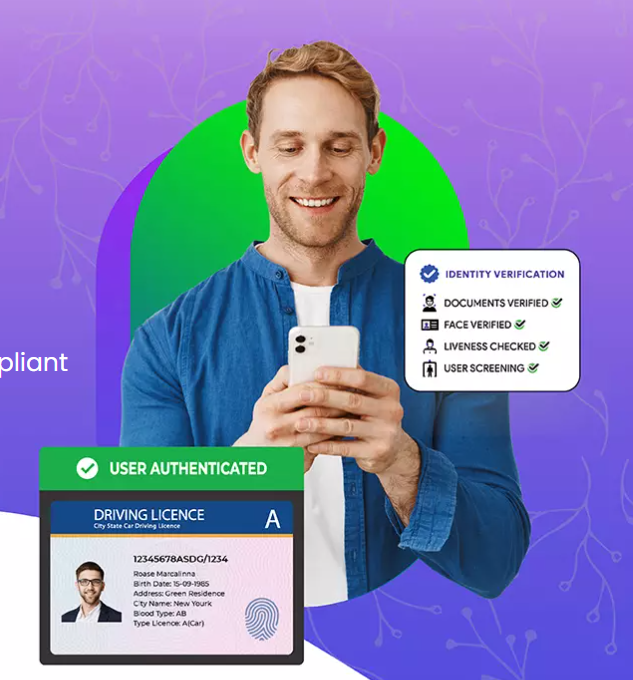
As digital services continue to replace traditional identity-checking processes, businesses need reliable technologies to confirm that a person is genuinely who they claim to be. Face match verification and NFC verification have emerged as two important technologies for building secure, convenient, and efficient identity verification workflows. When used together, they can provide multiple layers of identity assurance while helping organizations reduce fraud and streamline customer onboarding.
What Is Face Match Verification?
Face match verification is a biometric identity verification technology that compares a person's facial image with a trusted reference image. The reference may come from an identity document, an existing customer record, or another verified source.
During the verification process, the system analyzes facial characteristics and generates a similarity assessment between the submitted face and the reference image. Advanced solutions can account for variations such as lighting, facial expressions, camera quality, and image positioning.
Face match verification is particularly valuable when organizations need to establish whether the individual presenting an identity document is the same person represented by the document.
How Face Match Verification Works
A typical face match verification workflow involves several stages. First, the user captures a selfie or facial image using a smartphone or computer camera. The system then processes the image to identify and analyze relevant facial features.
If an identity document is also provided, the system extracts the document's portrait and compares it with the user's captured face. A matching score or verification result is then generated according to the configured verification criteria.
For stronger protection, face matching can be combined with face liveness detection. Liveness technology helps determine whether the biometric sample comes from a live person rather than a photograph, video, screen replay, or other presentation attack.
This combination can create a more comprehensive identity verification process.
What Is NFC Verification?
NFC verification uses Near Field Communication (NFC) technology to read information from compatible contactless identity documents and NFC-enabled devices. Many modern identity documents contain embedded chips capable of securely storing digital information.
With an NFC-enabled smartphone, a user can place the document near the device and allow the verification system to communicate with the chip. Depending on the document and implementation, information such as identity details, document data, and biometric information can be retrieved and validated.
Unlike simply taking a photograph of an identity document, NFC verification can provide access to information stored electronically within the document's chip, creating an additional layer for identity validation.
Why Combine Face Match Verification and NFC Verification?
Individually, both technologies can strengthen digital identity processes. Together, face match verification and NFC verification can create a powerful multi-layer approach.
NFC verification can help validate information from an electronic identity document, while face matching can help establish that the person presenting the document corresponds to its facial identity.
For example, during remote customer onboarding, a user may first scan an NFC-enabled identity document. The system can retrieve and validate relevant information from the chip. The user can then capture a live facial image, which can be compared with the document's biometric portrait.
This approach connects three important elements: the identity document, the digital information stored within it, and the person presenting it.
Benefits for Digital Identity Verification
Improved Fraud Detection
Combining document-based NFC verification with biometric face matching can make fraudulent identity attempts more difficult. Instead of relying on a single verification signal, organizations can evaluate multiple identity attributes.
Faster Customer Onboarding
Automated identity verification can reduce the need for manual document inspection and repetitive data entry. Customers can complete verification remotely using compatible smartphones and cameras, helping businesses create a smoother onboarding experience.
Better User Experience
Modern customers expect digital services to be quick and convenient. NFC verification can reduce manual document entry, while face match verification can provide a straightforward biometric confirmation step.
Multiple Layers of Assurance
A robust identity verification workflow should not depend on only one method. NFC technology can provide document-level information, while biometric face matching provides a person-level verification signal. Combining these capabilities can improve overall confidence in the verification result.
Applications of Face Match and NFC Verification
These technologies can support identity verification across numerous industries.
Banking and financial services: Banks and financial institutions can use them during digital account opening, customer onboarding, and identity checks.
KYC verification: Organizations can incorporate NFC document reading and face matching into remote KYC workflows to strengthen customer identity validation.
Telecommunications: Telecom providers can use digital identity verification when activating services or onboarding customers remotely.
Travel and hospitality: Secure identity verification can support digital check-in and customer authentication processes.
Insurance: Insurers can use identity verification during policy applications and other digital customer interactions.
Fintech platforms: Digital financial services can combine biometric verification and NFC document authentication to establish stronger onboarding controls.
Choosing the Right Verification Solution
Organizations evaluating a face match verification or NFC verification solution should consider more than basic functionality. Accuracy, processing speed, document compatibility, security controls, integration capabilities, scalability, and privacy should all be evaluated.
For face verification, businesses should look for solutions capable of handling real-world image conditions while maintaining reliable matching performance. For NFC verification, document compatibility and secure communication with supported identity documents are particularly important.
API availability is another important consideration. A well-designed face match verification API or NFC verification API can allow businesses to integrate identity checks into websites, mobile applications, onboarding platforms, and internal systems without rebuilding their entire technology stack.
The Future of Digital Identity Verification
Identity verification is increasingly moving toward automated, mobile-first, and multi-layered processes. Face biometrics and NFC technology are well positioned to play an important role in this transformation.
Future identity verification workflows are likely to combine document authentication, NFC chip validation, biometric face matching, liveness detection, and intelligent fraud detection into unified verification journeys. Such approaches can help organizations balance security with customer convenience.
Conclusion
Face match verification and NFC verification provide complementary capabilities for modern digital identity verification. NFC can help validate information associated with compatible electronic identity documents, while face matching can help confirm that the person undergoing verification corresponds to the document's facial identity.
When these technologies are combined with appropriate security measures and liveness detection, organizations can build stronger, more efficient, and user-friendly identity verification workflows. As digital onboarding continues to expand across financial services, KYC, telecommunications, insurance, and other industries, multi-layer identity verification will remain an important part of building trust in digital transactions.

About Premium Author
This post has been authored and published by one of our premium contributors, who are experts in their fields. They bring high-quality, well-researched content that adds significant value to our platform.
You Might Also Like


Popular Categories
Stay Connected
Recent Posts