Can IPTV Australia Replace Your Traditional TV Service?
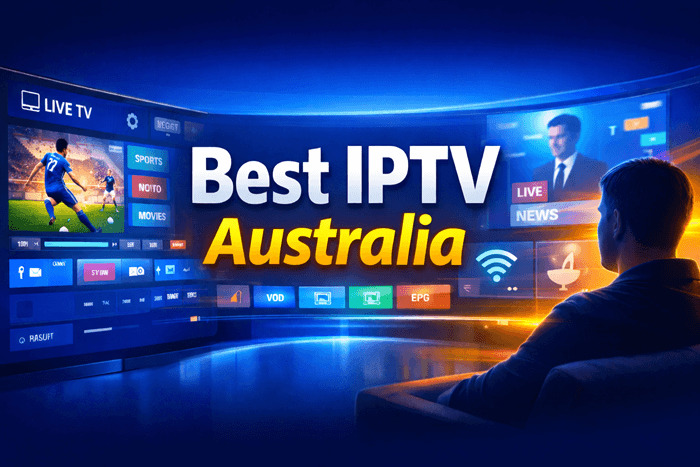
The way we watch television is changing quickly. Traditional TV services are no longer the only option for Australian households. With faster internet connections, Smart TVs, and streaming applications, more viewers are exploring internet-based television.
This raises an important question: Can IPTV Australia replace your traditional TV service?
For some households, the answer may be yes. IPTV can provide live television, sports, movies, news, and on-demand entertainment through the internet. However, whether it can fully replace a traditional TV service depends on the channels you watch, your internet connection, your devices, and the provider you choose.
IPTV Australia
IPTV Australia refers to television content delivered through an internet connection using Internet Protocol technology.
Traditional television may use terrestrial broadcasting, cable, or satellite. IPTV uses an IP network to deliver available content to compatible devices.
Depending on the provider and its content rights, IPTV may offer:
- Live TV channels
- Australian channels
- Sports
- News
- Movies
- TV series
- Kids' programs
- Documentaries
- International channels
- Video on Demand (VOD)
The exact content depends on the provider and the rights it has to distribute that content.
IPTV Subscription Australia
An IPTV subscription Australia gives users access to selected television content for a specific period.
Different subscriptions can vary in price, channel selection, video quality, device support, and additional features.
Before replacing a traditional TV service, we should check:
- Channels we regularly watch
- Sports availability
- Movie and TV content
- VOD options
- Smart TV compatibility
- Internet requirements
- Number of supported devices
- Customer support
- Subscription cost
- Content licensing
A subscription should be judged by how well it matches our viewing habits rather than simply by the number of channels advertised.
How IPTV Differs From Traditional TV
The main difference is how television content reaches the viewer.
Traditional television can rely on broadcast, cable, or satellite delivery. IPTV uses an internet connection.
This can give IPTV users more flexibility because the service can potentially be accessed through different compatible devices.
Traditional TV can still have advantages, particularly for households that prefer a simple setup or have limited internet access.
Can IPTV Replace Cable or Satellite TV?
For some users, IPTV may replace the need for a traditional cable or satellite television service.
If we mainly watch channels that are legally available through an IPTV service, have reliable internet, and use compatible devices, IPTV may provide enough entertainment for our household.
However, we should compare the exact channels and services before cancelling an existing television subscription.
Live TV With IPTV
One reason people consider IPTV as a replacement is access to live television.
Depending on the provider and its content rights, users may be able to watch live:
- News
- Sports
- Entertainment
- Australian television
- International programming
This can make IPTV feel similar to traditional television while using the internet as the delivery method.
What About Sports?
Sports can be one of the biggest factors when deciding whether IPTV can replace traditional TV.
Australian viewers may follow sports such as:
- AFL
- NRL
- Cricket
- Football
- Rugby
- Tennis
- Motorsport
However, sports broadcasting rights are important. Not every IPTV service is authorized to provide every sporting event.
We should always check whether the provider has the appropriate rights to distribute the sports content it advertises.
Movies and TV Shows on IPTV
Modern viewers often want more than live channels.
Many IPTV services may include Video on Demand (VOD), depending on their content rights.
VOD can allow users to select available:
- Movies
- TV series
- Documentaries
- Family programs
- Comedy
- Drama
This can make an IPTV service more flexible than a traditional live-only television setup.
IPTV on Smart TVs
Smart TVs have made internet-based television easier to access.
Depending on the provider and application, IPTV may work with compatible:
- Smart TVs
- Android TV devices
- Google TV devices
- Streaming sticks
- Smartphones
- Tablets
- Computers
Before subscribing, we should confirm that the provider supports our specific device and operating system.
Internet Speed Is Important
Unlike traditional broadcast television, IPTV depends on an internet connection.
If the connection is slow or unstable, we may experience:
- Buffering
- Playback interruptions
- Poor picture quality
- Delayed loading
As a general guide, HD streaming may require around 10 Mbps, while 4K streaming can require around 30 Mbps or more. Actual requirements vary depending on the service, compression, device, and network conditions.
Can IPTV Offer Better Flexibility?
Flexibility is one of IPTV's main advantages.
A compatible IPTV service can allow users to watch content on different screens instead of being tied to one traditional television connection.
For example, depending on the provider's rules, we may use a Smart TV at home and a compatible mobile device for viewing elsewhere.
However, we should check device and simultaneous-stream limits before subscribing.
What Traditional TV Still Does Well
Although IPTV can offer many benefits, traditional TV still has advantages.
Traditional television can be appealing because it may provide:
- Simple operation
- Familiar channel navigation
- Reliable broadcast delivery
- Less dependence on home internet
- Easy access for viewers who prefer conventional TV
For some households, traditional television may still be the better choice.
What IPTV Does Well
IPTV can be attractive because of its flexibility and internet-based features.
Potential benefits include:
- Live TV and VOD in one service
- Multiple compatible device options
- Flexible viewing
- Wide content categories
- Digital program guides
- Internet-based access
- Modern Smart TV integration
The actual benefits depend on the provider and its available content.
Is IPTV Cheaper Than Traditional TV?
Cost is one of the reasons some people consider IPTV.
An IPTV subscription may appear less expensive than some traditional TV packages, but we should compare the total cost.
Consider:
- IPTV subscription price
- Existing internet cost
- Traditional TV subscription
- Required devices
- Application costs, if any
- Additional subscriptions for specific content
The cheapest option is not always the best option. We should compare the content and features we actually use.
Important Legal Considerations
IPTV itself is simply a technology for delivering content over an IP network. It is not automatically legal or illegal.
The important issue is whether a particular provider has the necessary rights or authorization to distribute its content.
Before replacing a traditional service, we should choose a provider that is transparent about its content and operates within applicable laws and licensing requirements.
How to Decide if IPTV Is Right for You
Before cancelling a traditional TV service, use this simple checklist:
Check Your Favourite Channels
Make sure the IPTV service provides the channels you watch most.
Check Sports
If sports are important, confirm that the events you want are legally available.
Check Your Internet
Make sure your connection is reliable enough for the desired streaming quality.
Check Your Smart TV
Confirm that the IPTV application works with your device.
Compare Costs
Compare the complete IPTV cost with your existing television setup.
Check VOD
If you watch movies and TV series, check whether suitable VOD content is included.
Check Licensing
Choose a provider with appropriate rights to distribute its content.
Should You Completely Cancel Traditional TV?
There is no universal answer.
Some households may find that IPTV provides everything they need. Others may prefer to keep a traditional television service for particular channels, sports, or reliability.
A practical approach can be to compare both options first. Make a list of the channels and programs we regularly watch and see whether a suitable IPTV service can legally provide them.
IPTV vs Traditional TV: A Simple Comparison
| Feature | IPTV | Traditional TV |
|---|---|---|
| Delivery | Internet | Broadcast/Cable/Satellite |
| Live TV | Yes, depending on service | Yes |
| VOD | Often available | Depends on provider |
| Internet Required | Yes | Usually no for broadcast |
| Smart TV Integration | Often available | Depends on service |
| Device Flexibility | Often higher | Varies |
| Picture Quality | Depends on internet/service | Depends on delivery method |
| Channel Selection | Depends on provider | Depends on package |
Conclusion
So, can IPTV Australia replace your traditional TV service? For some households, it certainly can be a practical alternative.
IPTV can provide live TV, sports, movies, news, international programming, and VOD through a compatible internet-connected device. It can also offer flexibility across Smart TVs and other supported devices.
However, we should not switch based only on price or channel numbers. We should compare content, internet requirements, device compatibility, streaming quality, customer support, cost, and licensing.
An IPTV subscription Australia may be the right choice for viewers who want a flexible, internet-based television experience. For others, traditional TV may still provide a simpler or more suitable solution.
The best choice is the one that reliably and legally provides the content our household actually watches.

About Premium Author
This post has been authored and published by one of our premium contributors, who are experts in their fields. They bring high-quality, well-researched content that adds significant value to our platform.
Popular Categories
Stay Connected
Recent Posts